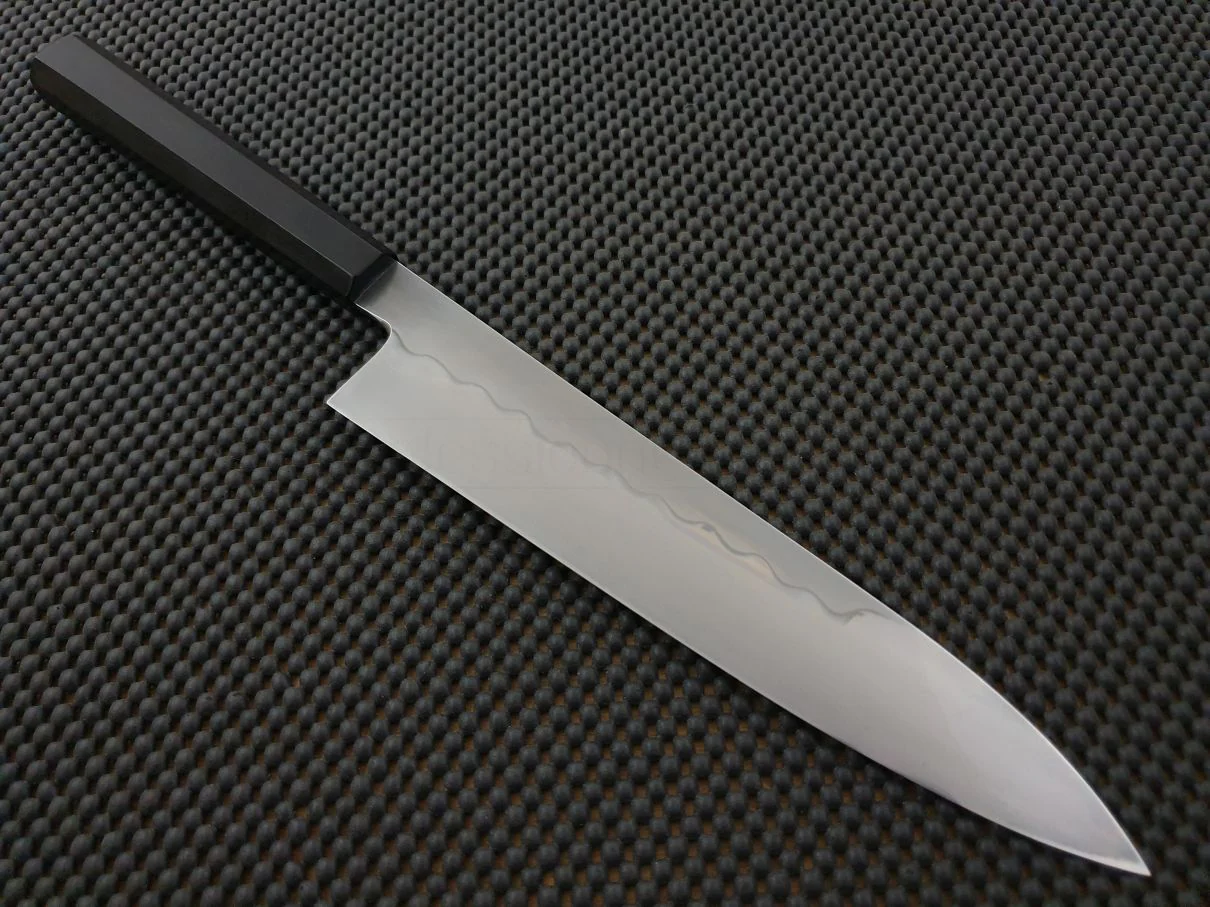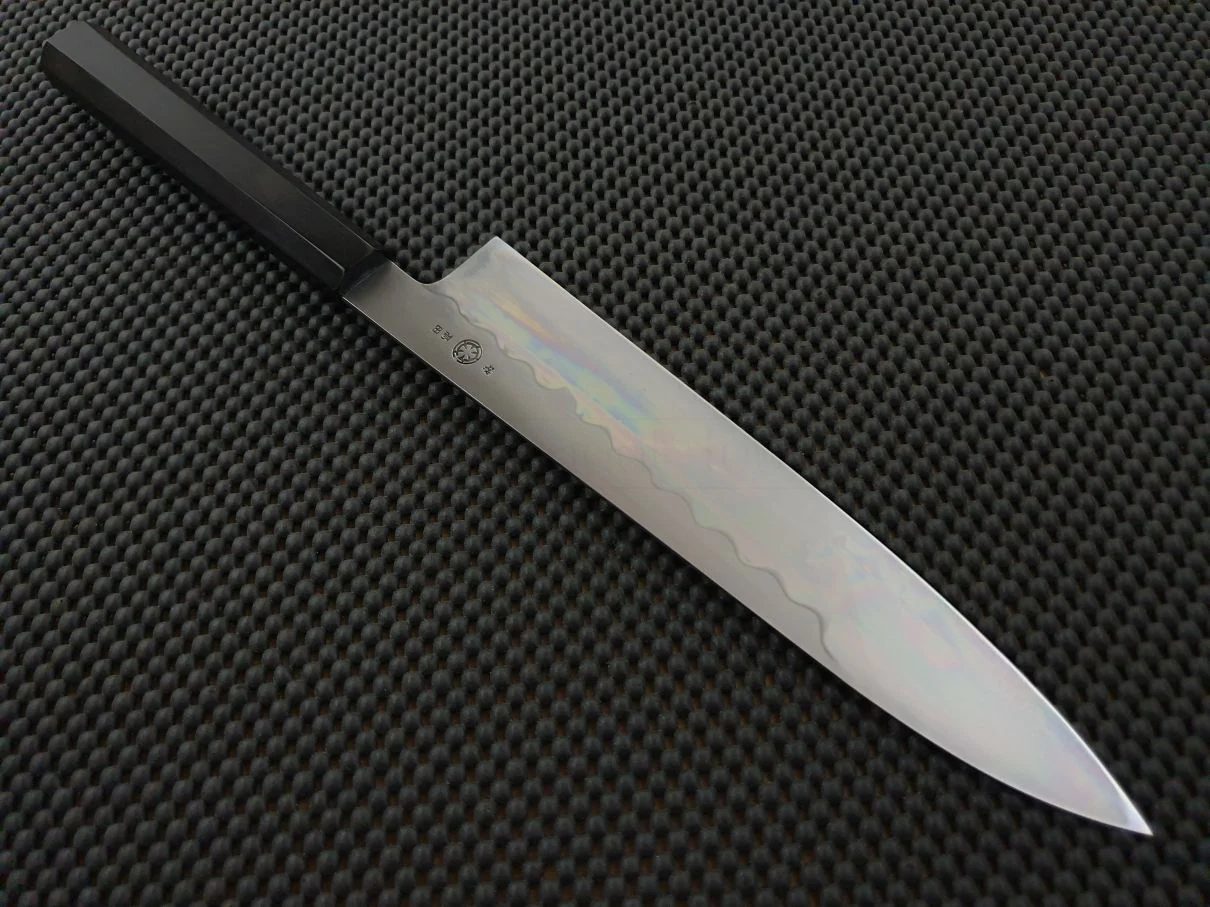
Fujiwara Maboroshi | 195 Nakiri Knife
Teruyasu Fujiwara is a pioneer of the Japanese blacksmith fraternity, finish levels are generally lower but his heat treatment is about as good as it gets. Yielding extremely high sharpness potential, these knives outperform many that cost considerably more.
These knives are quite thin with a high HRC, care is required to prevent chipping.
- Teruyasu Fujiwara Japanese Knife
- Maboroshi Series
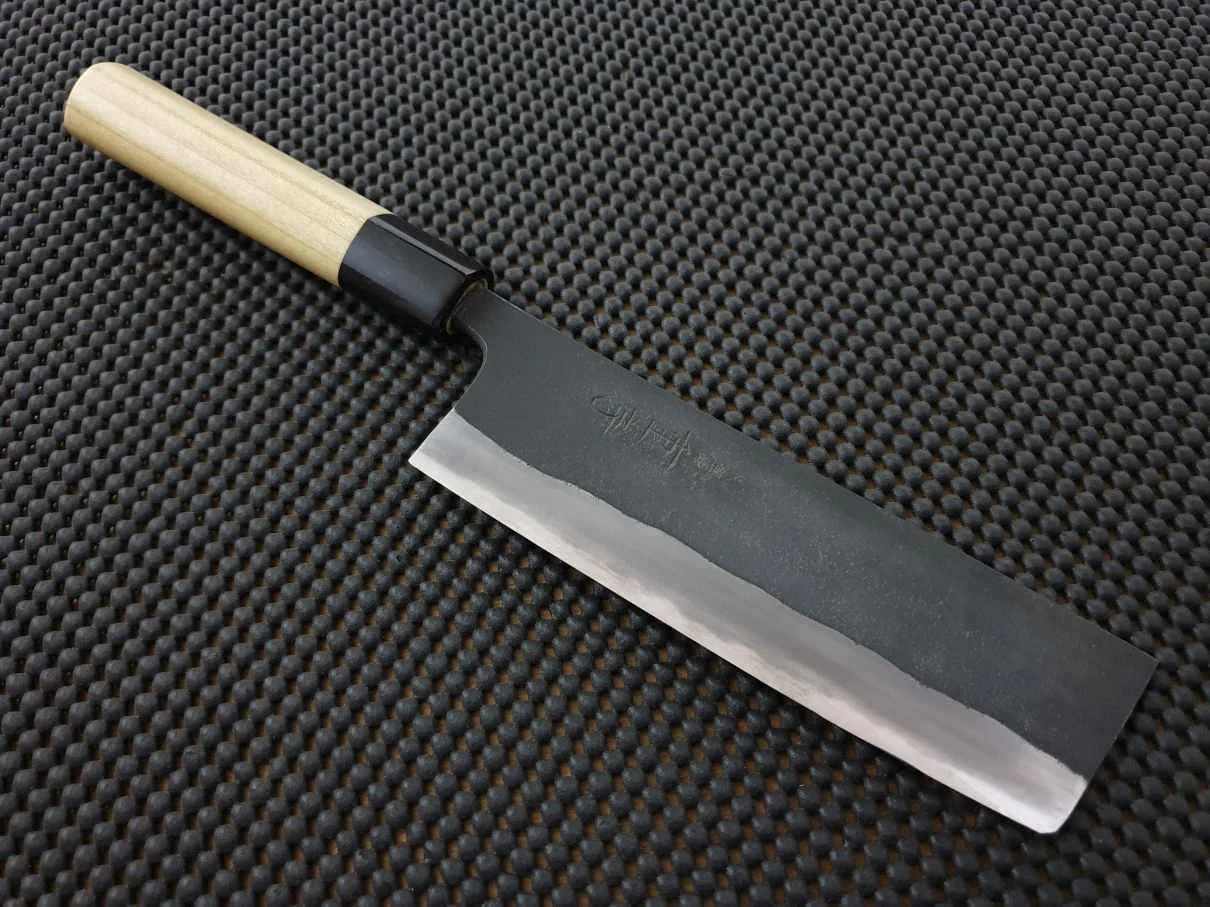
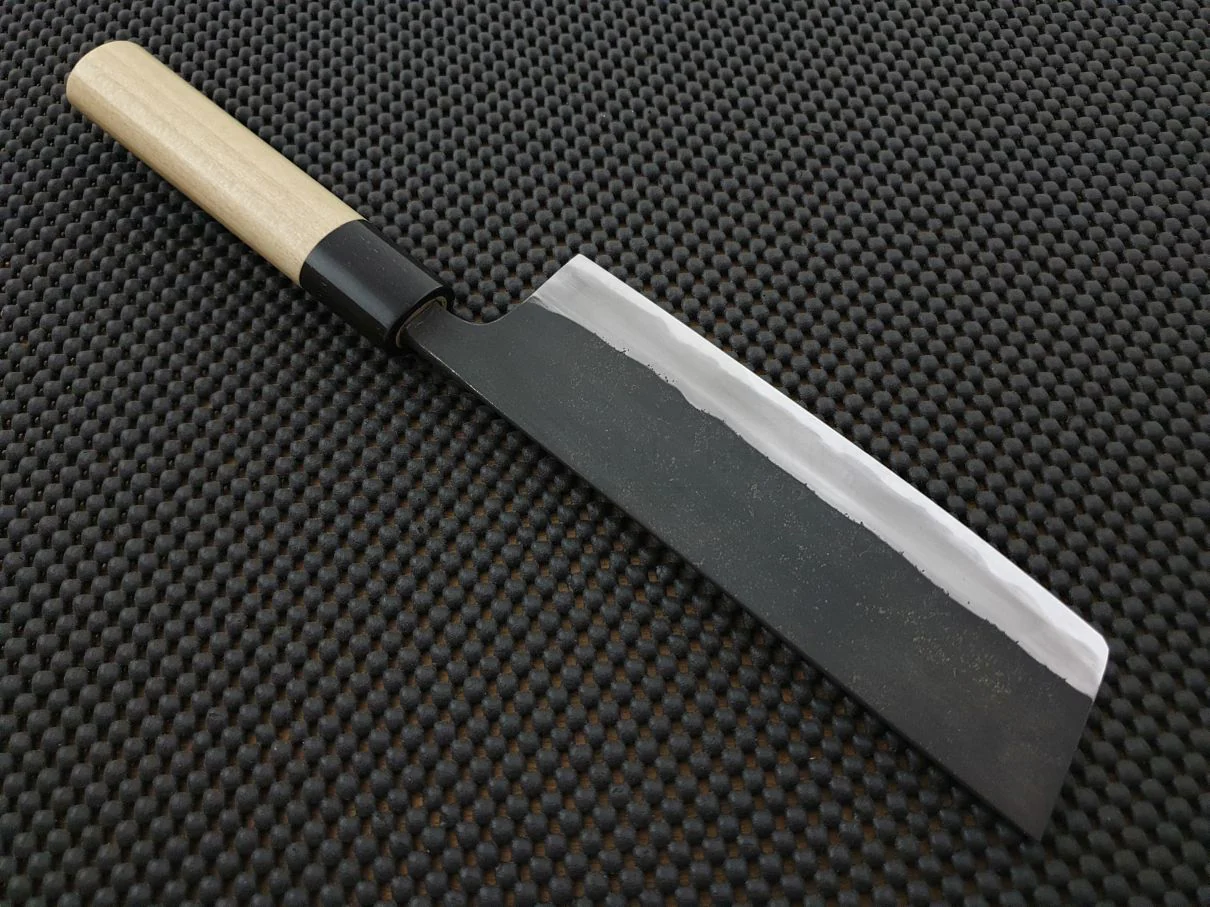
- 195mm Nakiri Knife
- Shirogami (White) #1, Soft Stainless Clad
- Magnolia Wood & Buffalo Handle
- Hand crafted in Japan
- Edge Length: 177mm | Overall Length: 338mm | Blade Height: 61mm | Weight: 192g
- Blade Thickness: (A) 3.8 (B) 2.0 (C) 1.8 (at spine)

* High-carbon steel (found in the core / edge of this chef knife) will change colour (patina) during use, care is required to prevent rust.
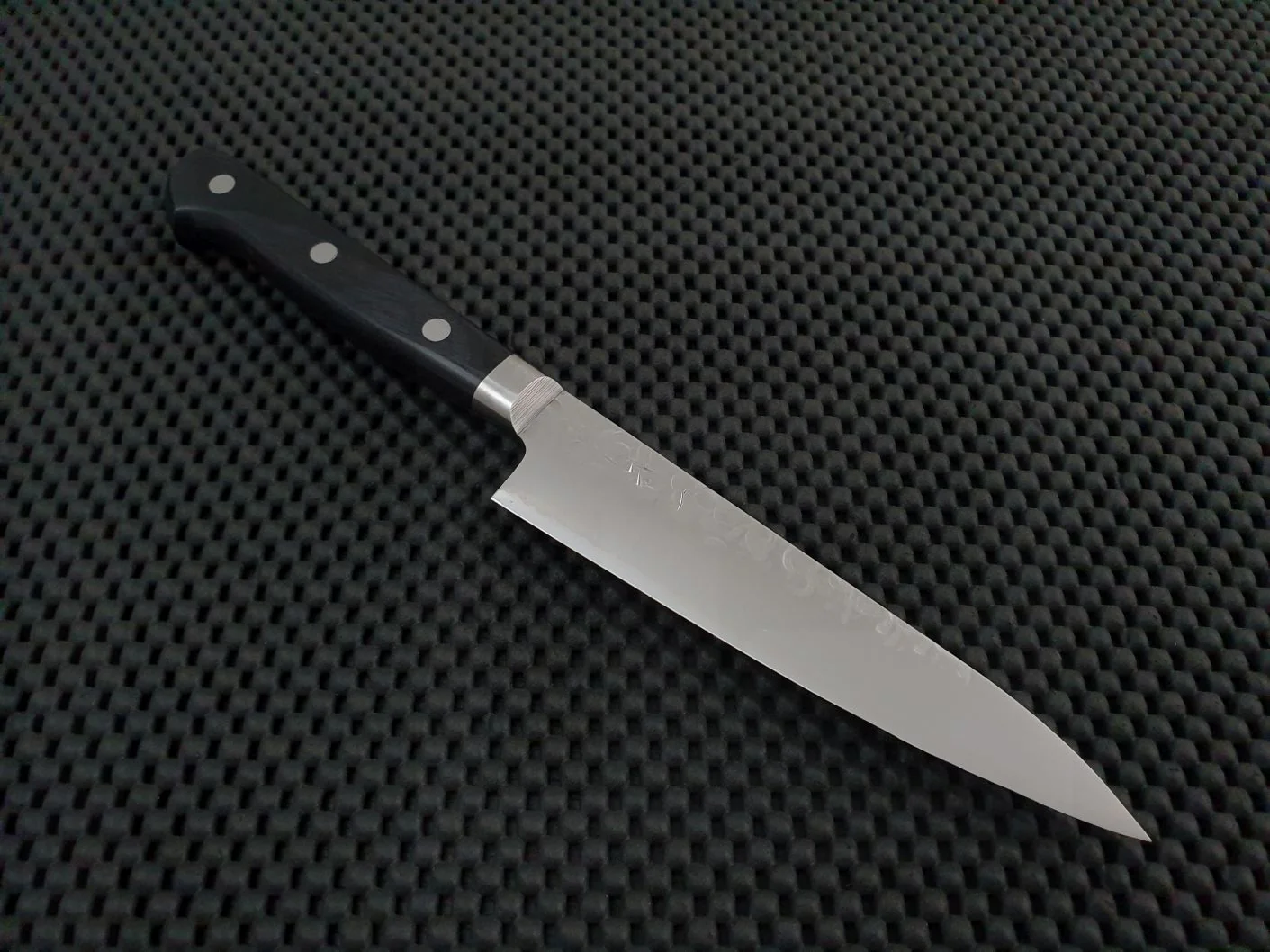
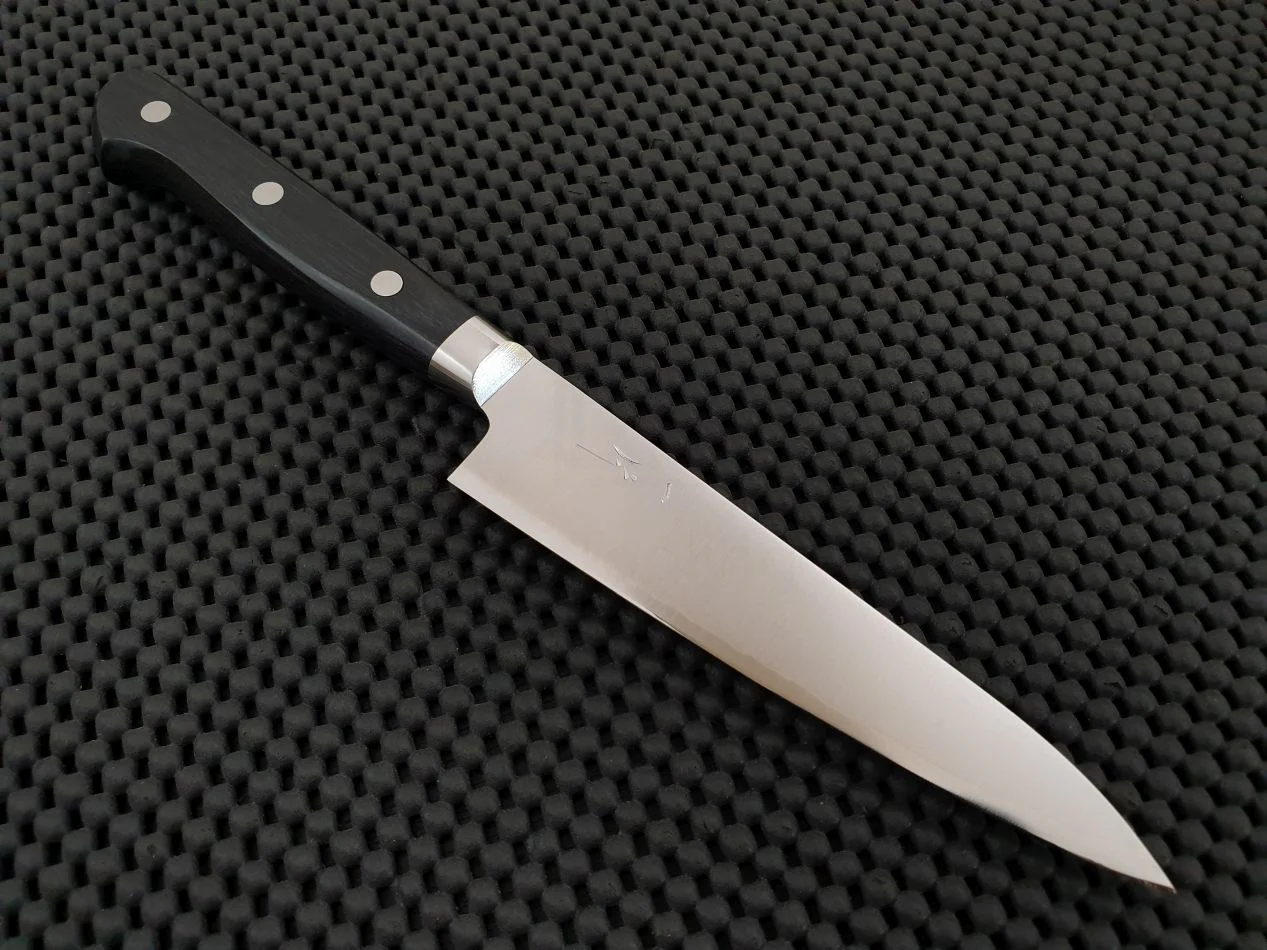
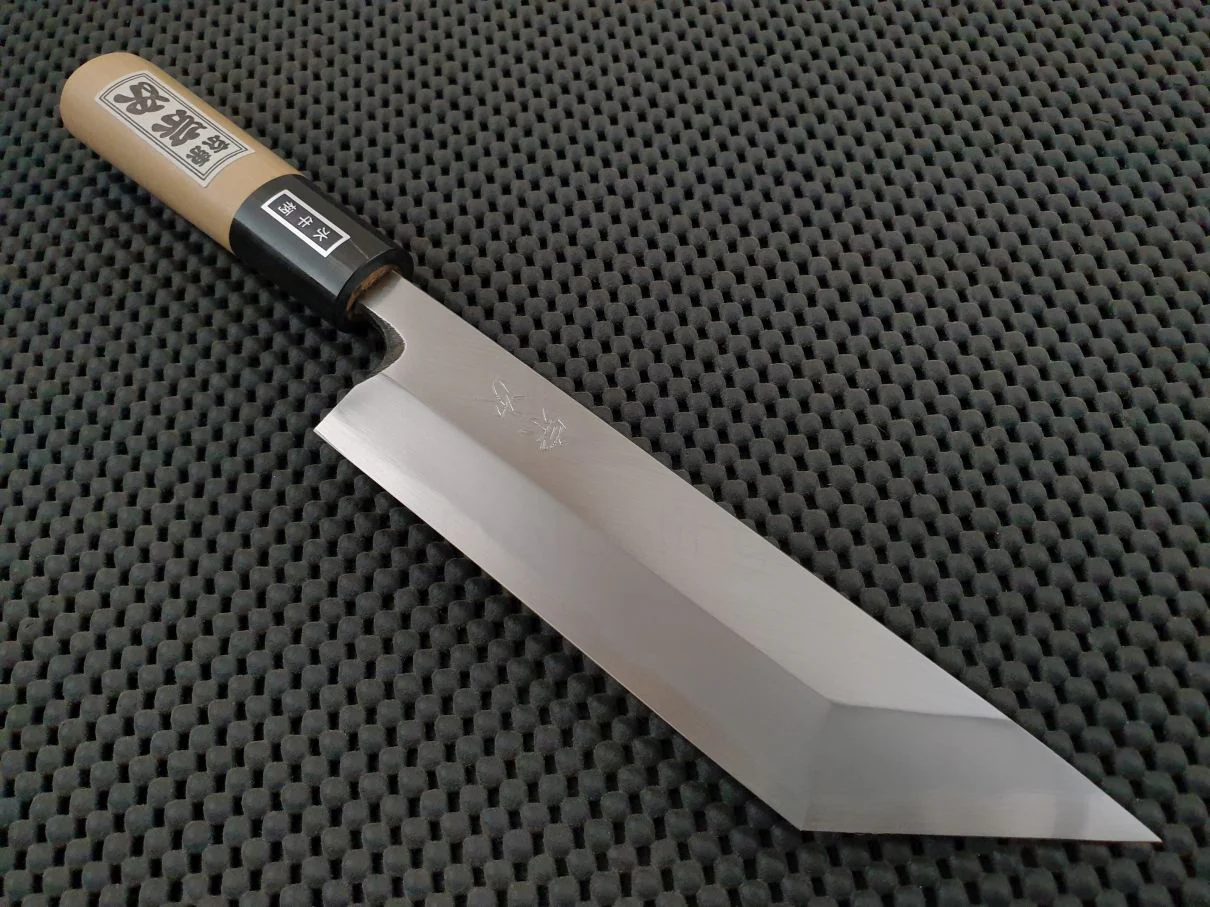
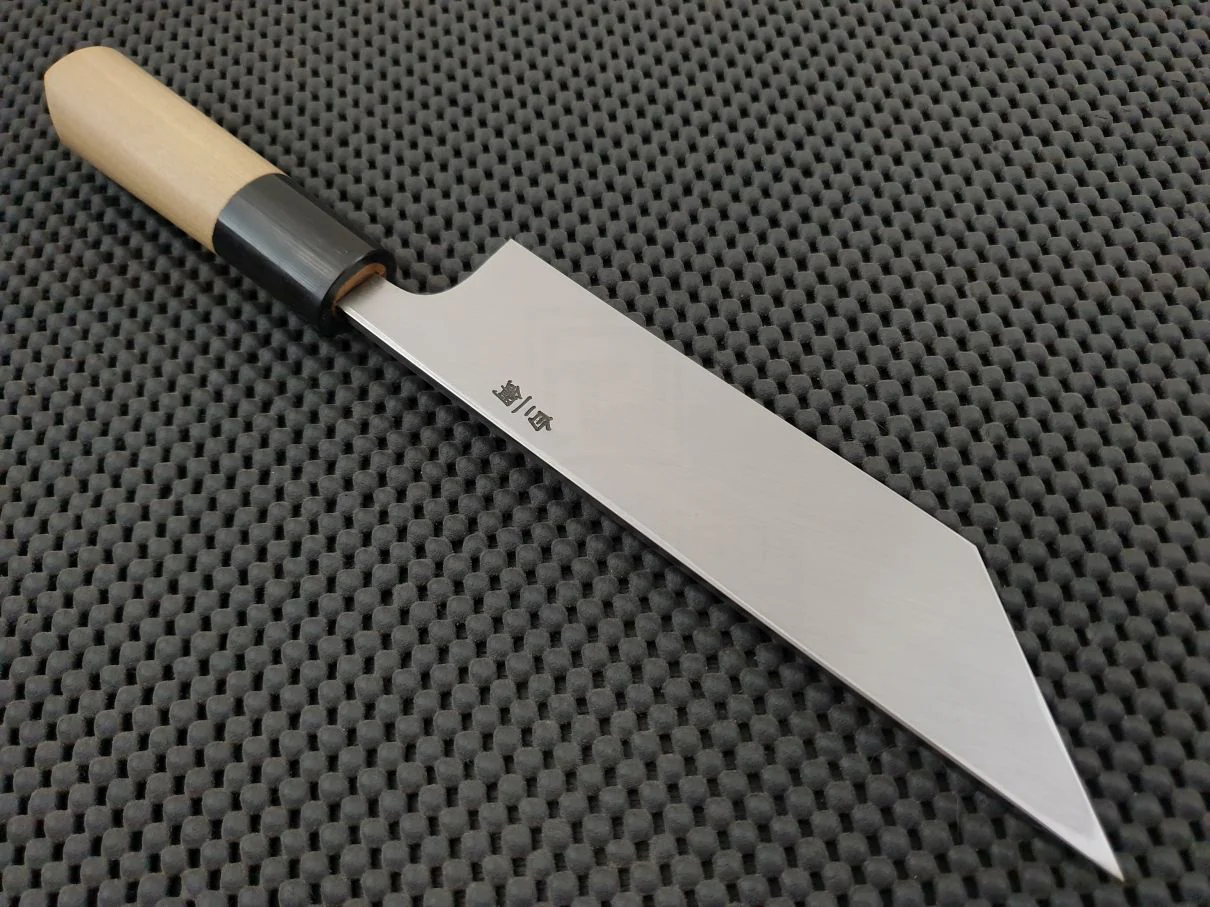
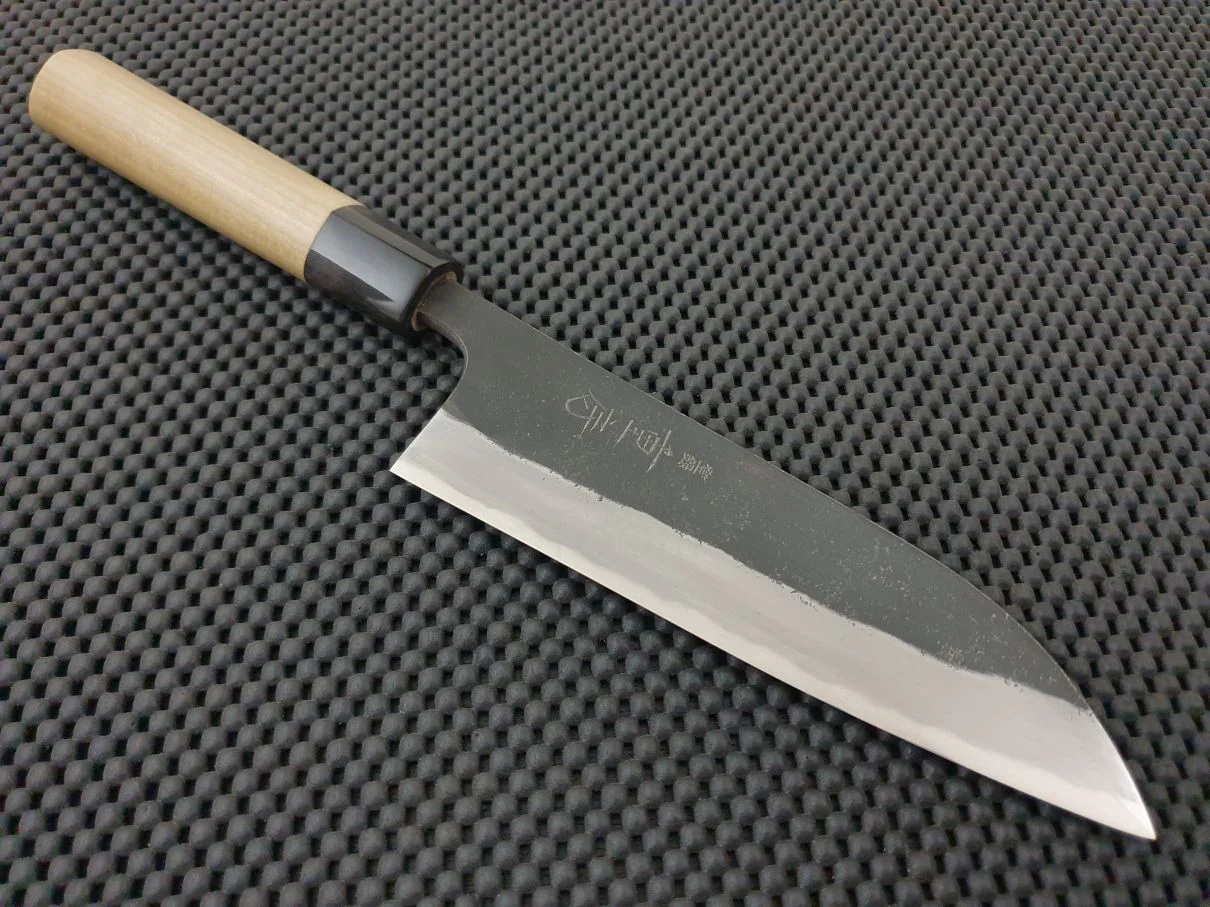
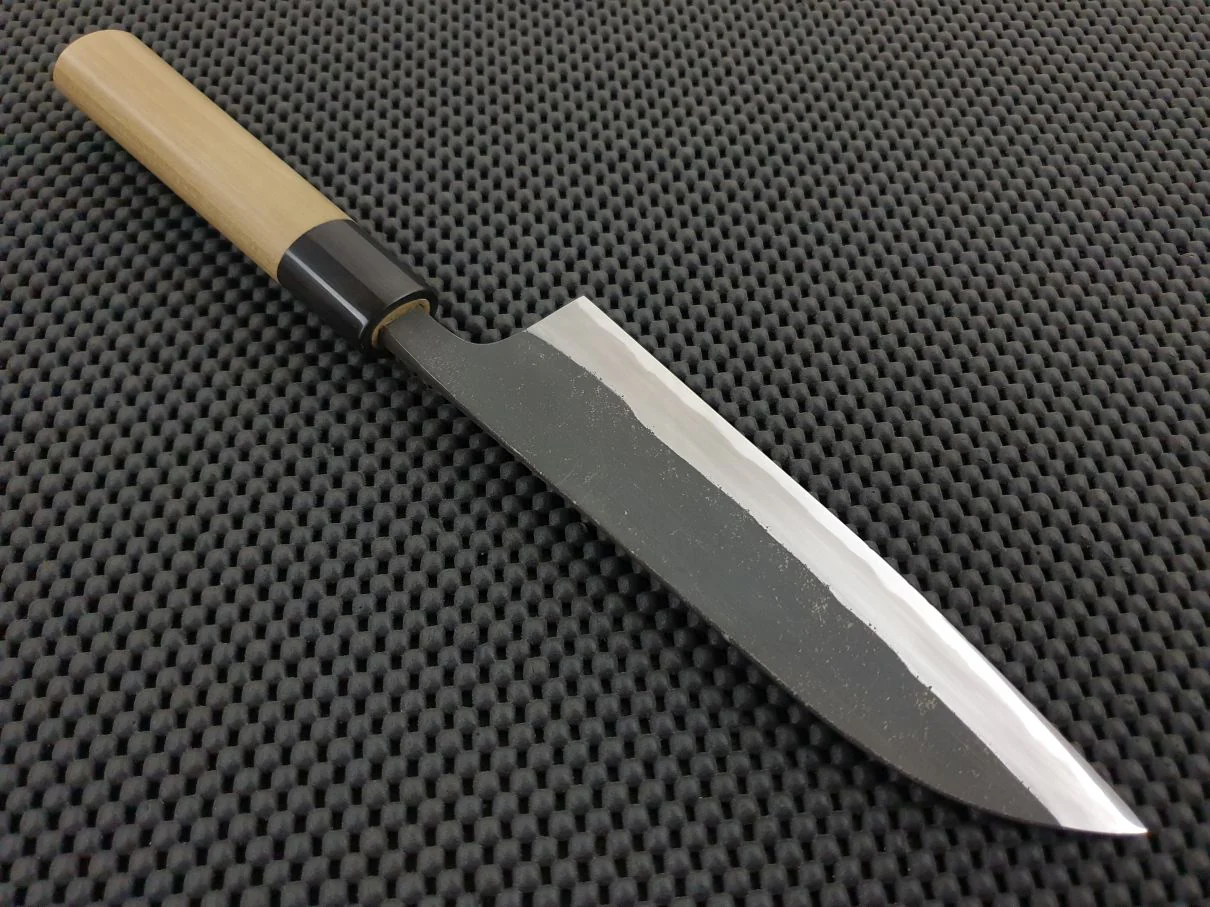
* As our Japanese chef knives are hand-made, small variations in size and appearance may occur, and measurements and images are a guide only.
* These knives are thin and made from White #1 steel, care is required to prevent chipping.

Japanese Kitchen Knife | Nakiri (Vegetable Knife)
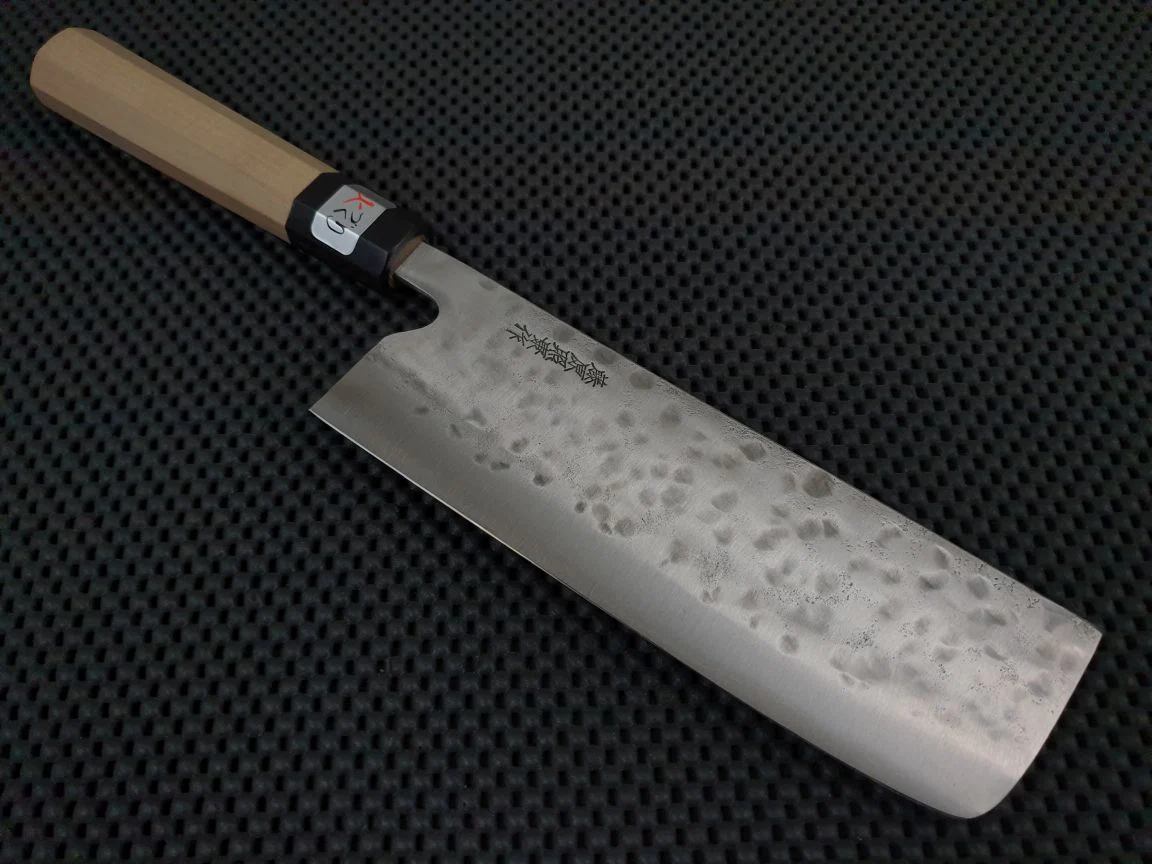
Nakiri knives have a flat profile and tall blade height which aids in push chopping but does make rock style cutting a little uncomfortable. The Nakiri, like many western style chef knives has a double bevel grind, in contrast to the Japanese style vegetable knife, the Usuba, which is single bevel. Whilst a Gyuto or Santoku does do a good job at cutting vegetables, the larger flat bottom of a Nakiri or Usuba make the task much easier. The Nakiri is one of our favourite profiles, highly recommended
Teruyasu Fujiwara is a pioneer of the Japanese blacksmith fraternity, finish levels are generally lower but his heat treatment is about as good as it gets. Yielding extremely high sharpness potential, these knives outperform many that cost considerably more.
These knives are quite thin with a high HRC, care is required to prevent chipping.
- Teruyasu Fujiwara Japanese Knife
- Maboroshi Series
- 195mm Nakiri Knife
- Shirogami (White) #1, Soft Stainless Clad
- Magnolia Wood & Buffalo Handle
- Hand crafted in Japan
- Edge Length: 177mm | Overall Length: 338mm | Blade Height: 61mm | Weight: 192g
- Blade Thickness: (A) 3.8 (B) 2.0 (C) 1.8 (at spine)
* High-carbon steel (found in the core / edge of this chef knife) will change colour (patina) during use, care is required to prevent rust.
* As our Japanese chef knives are hand-made, small variations in size and appearance may occur, and measurements and images are a guide only.
* These knives are thin and made from White #1 steel, care is required to prevent chipping.
Japanese Kitchen Knife | Nakiri (Vegetable Knife)
Nakiri knives have a flat profile and tall blade height which aids in push chopping but does make rock style cutting a little uncomfortable. The Nakiri, like many western style chef knives has a double bevel grind, in contrast to the Japanese style vegetable knife, the Usuba, which is single bevel. Whilst a Gyuto or Santoku does do a good job at cutting vegetables, the larger flat bottom of a Nakiri or Usuba make the task much easier. The Nakiri is one of our favourite profiles, highly recommended
Original: $859.00
-70%$859.00
$257.70Description
Teruyasu Fujiwara is a pioneer of the Japanese blacksmith fraternity, finish levels are generally lower but his heat treatment is about as good as it gets. Yielding extremely high sharpness potential, these knives outperform many that cost considerably more.
These knives are quite thin with a high HRC, care is required to prevent chipping.
- Teruyasu Fujiwara Japanese Knife
- Maboroshi Series
- 195mm Nakiri Knife
- Shirogami (White) #1, Soft Stainless Clad
- Magnolia Wood & Buffalo Handle
- Hand crafted in Japan
- Edge Length: 177mm | Overall Length: 338mm | Blade Height: 61mm | Weight: 192g
- Blade Thickness: (A) 3.8 (B) 2.0 (C) 1.8 (at spine)
* High-carbon steel (found in the core / edge of this chef knife) will change colour (patina) during use, care is required to prevent rust.
* As our Japanese chef knives are hand-made, small variations in size and appearance may occur, and measurements and images are a guide only.
* These knives are thin and made from White #1 steel, care is required to prevent chipping.
Japanese Kitchen Knife | Nakiri (Vegetable Knife)
Nakiri knives have a flat profile and tall blade height which aids in push chopping but does make rock style cutting a little uncomfortable. The Nakiri, like many western style chef knives has a double bevel grind, in contrast to the Japanese style vegetable knife, the Usuba, which is single bevel. Whilst a Gyuto or Santoku does do a good job at cutting vegetables, the larger flat bottom of a Nakiri or Usuba make the task much easier. The Nakiri is one of our favourite profiles, highly recommended